

18.6K
Downloads
120
Episodes
CARE staff around the world talk about experiences we learn from failure, and how we use that to get better at our work.
Episodes
Jul 1, 2024
Jul 1, 2024
25 min
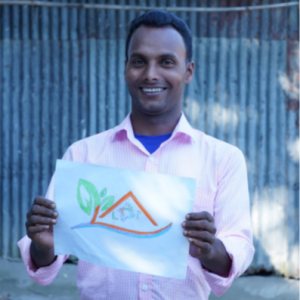
What's in a logo, and why does localization need to include participant-led logo design? Zinat Ara Afroze and Sairana Ahsan explore the logo competition to have frontline service providers design a logo for their own services. What did they learn? Only 9 people out of a potential 450 participated in the competition the first time around, and understanding why not, and what level of understanding it takes to draw a logo that sums up your job showcased how much more shared understanding there was to build. Zinat's recommendation for what you should do? Practice adaptive management and CLA. Check out their case study here.
May 16, 2024
May 16, 2024
25 min
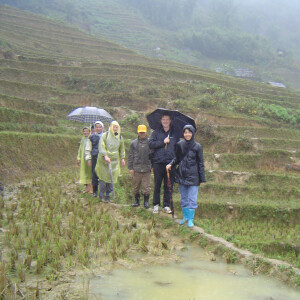
Inspired by his recent blog post on From Poverty to Power, Duncan Green reflects on why it's important to learn from failure, and some of his own failure stories. "Think before you jump", and "be a reflectivist as well as an activist" are some of his key pieces of advice to people working in the sector. He's got stories about playing chess from the management bunker, evidence-based humility, and How Change Happens, the second edition paperback and Open Access that's coming out starting from August 16.
Want to hear more stories from Duncan and the change makers he works with? Listen to his podcast: GELI Stories podcasts
May 7, 2024
May 7, 2024
28 min
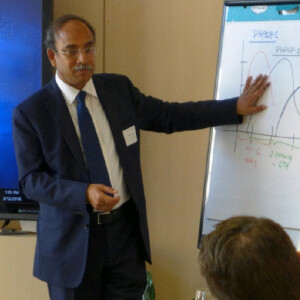
"I wish I had known that my biggest source of learning would be my field colleagues. ...I believed in textbooks." Dr. Muhammad Musa reflects on 41 years of work in international development. His two biggest lessons are: learn from your frontline staff, and tell stories with impact. Some lessons he learned in the decades are to build a fearless climate--a climate of trust, where staff at all levels can learn from failure, and can take time to reflect. He also notes that moving from a project to a movement--one that changes a system--is the best way to create change. Technical solutions are not the only (or even the best) way to get the job done.
Apr 22, 2024
Apr 22, 2024
13 min
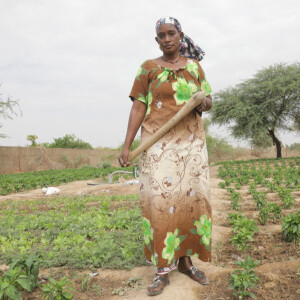
The Feed the Future Mali Sugu Yiriwa operates in the Delta Zone of Mali, aiming to strengthen the resilience of farming and business communities through market-driven, inclusive, nutrition-sensitive, and agriculture-driven economic growth. However, the complex nature of Mali’s political situation poses significant challenges to program implementation and participant outreach. In this episode of the Failing Forward Podcast, Laurore Antoine, Chief of Party for Sugu Yiriwa, shares valuable insights into how adaptive leadership, collaboration with local grassroots organizations, and strategic use of digital solutions, among other adaptive management approaches, have been instrumental in achieving program goals and positively impacting lives in Mali.

Mar 26, 2024
Mar 26, 2024
13 min
Christabell Makokha talks about always anchoring innovation to the success metric: have I solved the problem? Instead of focusing on the process, focus on the problem, and whether or not people's lives are getting better. She reflects on why innovation labs fail (inspired by this article from ICTworks). What's going wrong?
- We define innovation as "the next new thing" rather than leveraging creative problem solving.
- We struggle to find the balance between stand-alone innovation work and innovation integrated with existing programming
- We measure the wrong things--too much process measurement, and not enough problem-solving.
- Our risk appetite is too low, and our timelines are too short.

Feb 27, 2024
Feb 27, 2024
33 min
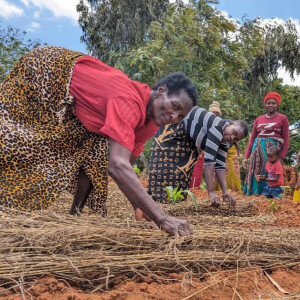
You’ve done the desk literature reviews, collected and conducted field studies, crafted and deployed surveys, analyzed the data, written up the results, and released your study findings. Is it having any real influence or impact? How do you know? Laura Kim and Michelle LeMeur of the Canopy Lab wrestled with these questions when they attempted to trace uptake by stakeholders of their studies on COVID-19 and the international development workforce: https://www.marketlinks.org/blogs/beyond-downloads-views-and-likes-how-do-you-know-your-research-having-impact
Jan 30, 2024
Jan 30, 2024
14 min
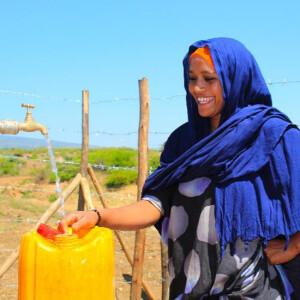
Titukulane's progress was achieved by addressing the failures it faced in the years leading up to 2023. When the program was first implemented, the COVID-19 pandemic swept the world, making it extremely difficult to implement field-level activities. However, Titukulane was able to turn around its failures by starting from the roots and addressing every aspect of the program. They focused on team building and cross-functional teamwork, built the capacity of the M&E teams, made field engagement a regular task for everyone involved, and engaged participants in multiple activities to diversify their income while keeping sustainability in mind. This was no small feat. Listen to Daniel Abbott, the Chief of Party of Titukulane, as he speaks about how closely he worked with the team to address every detail and achieve where Titukulane stands today.
Jan 17, 2024
Jan 17, 2024
23 min
Maria Alemu and Gregory Makabila talk about the Ifaa project's Failure Summit, and what it took to create a culture where failure spurred reflection, learning and action. Lessons from Saint Yared, a learning from failure roadmap, pre-mortem exercises, and the 5 Whys of Failure were all key tools that helped the team learn, adapt, and improve. Check out their reflections, what they would do differently, and the diverse range of tools that helped the team embrace failing forward.
Ifaa is a USAID-funded RFSA project that CRS leads in Ethiopia.

Jan 3, 2024
Jan 3, 2024
31 min
It's not easy or obvious to not only work with adolescent girls in crisis settings, but also to let them lead. But it is possible. AMAL currently operates in Syria, Nigeria, and Somalia, addressing the unique vulnerabilities of adolescent girls in crisis settings, such as early marriages and adolescent pregnancy. The program includes components like a Young Mother's Club, Community Dialogues, and a health provider curriculum to improve sexual and reproductive health service uptake and enhance participants' life skills. Our guest speaker, Pari Chowdhary, highlights the importance of relationship investments, continuous quality improvement mechanisms, and including adolescent girls in program design and evaluation. The final hope is for the program to be owned and run locally by the adolescent mothers themselves.
Dec 6, 2023
Dec 6, 2023
39 min
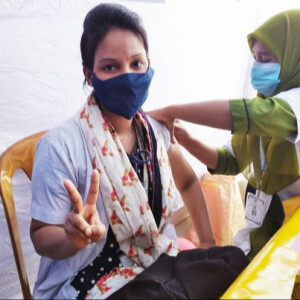
Katharine Nasielski, Pari Chowdhary, and Brittany Dernberger talk about Fast and Fair-- CARE's work trying to get COVID-19 vaccines out to the world to meet the global deadline for 80% vaccination rates by September 2022. Advocating for funding and policy change, running programs to support vaccine delivery around the world, and trying to measure global to local impact are all places where we've learned a lot about what we need to do next time. Because like it or not, we need to prepare for a next time. Consistent investments in innovative, nimble, and adaptable are our best shot for future pandemic preparedness.
Nov 21, 2023
Nov 21, 2023
27 min
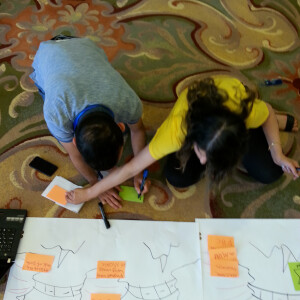
If you looked at a problem and thought, "the answer is more capacity building and more guidelines" Florence Santos says you might need to think again. Based on her experience leading Monitoring and Evaluation at CARE, she's seen a proliferation of tools and resources that aren't really solving the underlying solution. If it's the recommendation you would always have made under any circumstances, you're probably not looking carefully enough at the solution. Florence reflects on how she would get to a solution with fewer tools and trainings, and more systematic follow through.
Nov 8, 2023
Nov 8, 2023
22 min
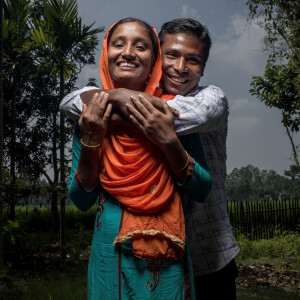
CARE implemented the Inspiring Married Adolescent Girls to Imagine New Empowered Futures (IMAGINE) project to design & test interventions aimed at delaying the timing of first birth among married adolescents in Niger (Zinder region) and Bangladesh (Kurigram district) between 2016 and 2022. Rachael Goba explains how the IMAGINE journey went on married adolescent girls envisioning, valuing and pursuing alternative life trajectories. For example, after 22 months of implementation, contraceptive use in Niger was significantly higher in the treatment group compared to the control group; and higher for those who have had a birth compared to those who have not.
Oct 25, 2023
Oct 25, 2023
24 min
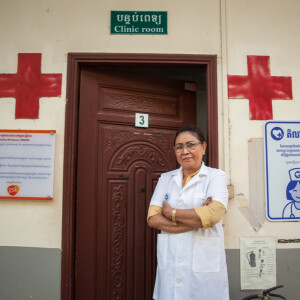
Frontline health workers play a critical role in delivering health services globally, especially to the hardest to reach populations. Despite their importance to health systems and universal health coverage goals, this majority female workforce faces diverse and ongoing barriers affecting their working conditions and capacity. Pari Chowdhary talks about how at CARE, we aim to bring support and work with and for FLHWs to achieve healthy outcomes across our programming countries, but also, we aim to bridge key gaps like equipping and training FLHWs.
Oct 11, 2023
Oct 11, 2023
28 min
This time on the other side of the mic, Emily Janoch talks about what it takes to truly move from learning to changing the choices we make, and the hard commitment to "do it differently, not just next time, but every time after that." We all need to be accountable to impact. How do we remove the idea that we are the heroes of the story in development, and how do we acknowledge our own privileges, let them go, and learn to deploy them for others instead of ourselves. Christabell Makhokha hosts, asks great questions, and helps hold a space for vulnerability.

Sep 21, 2023
Sep 21, 2023
29 min
Monalisa Salib wants you to get cozy with the context. If your theory of change is full of assumptions and logical statements that could easily be true anywhere in the world, it's probably not going to work. Only by understanding the context where we operate and respecting the actors and the expertise in that context will real change happen. That means knowing the specific players, actors, and dynamics where change gets done. Another tip she has for you: people matter more than process, and technical solutions will never be enough.