
18.4K
Downloads
119
Episodes
CARE staff around the world talk about experiences we learn from failure, and how we use that to get better at our work.
Episodes
Jun 3, 2020
Jun 3, 2020
18 min
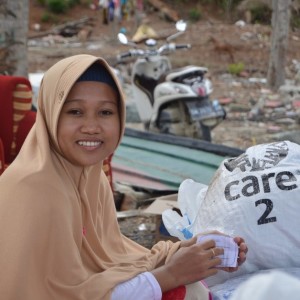
How do international NGOs create problems when they team up with local activists? It's the CARE of 1000 papers, where our processes are so focused on reducing risk that we bury local groups under the weight of our expectations, and don't give them the support they need. Puji Pujiono of the Pujiono Center and Victoria Palmer from CARE Canada talk about their paper based on the Sulawesi response in Indonesia, where we learned a lot about what we can do BEFORE we reach out to local partners so that we're truly helping response and empowering those partners. Stay tuned for part 2, where they discuss what we can do once a crisis hits.
Apr 20, 2020
Apr 20, 2020
15 min
Jay Goulden talks about designing a data system to collect information on pandemic response in 78 countries--a first for CARE. He says act quickly, iterate fast, and think what your system might need to be in two weeks or a month as the situation evolves. He also talks about reducing burdens on over-taxed staff, streamlining systems, and connecting data collection to data use. Oh--and make it beautiful to look at.

Apr 13, 2020
Apr 13, 2020
16 min
Holly Radice talks about how people have limited bandwidth to adopt new things in crisis, and how cash transfers in Ebola failed at digital solutions because of unrealistic expectations. Her recommendations: do everything you can to adapt and expand existing systems to push out cash safely, examine your context very carefully and frequently to see what market approaches work, and start planning now for cash transfers during recovery in a few months. Be empathetic to participants and financial service providers, and respect that everyone is affected. Finally, stay in touch with partners and cash working groups to find solutions that will support everyone.
Apr 6, 2020
Apr 6, 2020
12 min
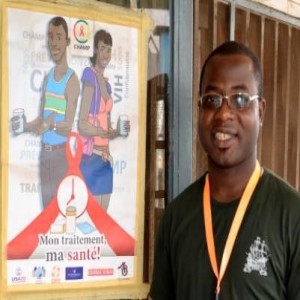
In this translation from the French Episode, Sandra Georges from CARE Cameroon talks about the CHAMPS project, and how they have had to move from "make others do" to "do together" to "let others do." It involves changing the way we think about partnership, gradually handing over responsibility, and believing local teams and communities about what approaches work best.
Mar 26, 2020
Mar 26, 2020
15 min
Alfred Makavore, a key responder in CARE's Ebola response in Sierra Leone in 2014-2015, share's lessons about how to improve our COVID-19 response. "At first, we thought it was just a clinical problem, and we treated it like that." Alfred encourages teams to think beyond a clinical response, to understand what communities are facing, and to build trust. "We have to push aside the panic." Engaging governments, setting up local coordination, and trusting field teams to make decisions are some of his key recommendations.

Mar 16, 2020
Mar 16, 2020
12 min
Learn to act with imperfect information. Take calculated risks. Remember who is most at risk. Those are just some of the calls to action from Andres Gomez de la Torre, drawing on CARE's learning from Ebola response. Originally recorded in August of 2018, this podcast has critical lessons that CARE is using today in planning our COVID 19 response, and are an important call to action as we know some of the world's poorest countries are about to get hit with a crisis for which they are not prepared.
Mar 4, 2020
Mar 4, 2020
17 min
Melch Natukunda from CARE Uganda talks about trying to build the first ever financial services app that linked poor rural women to banks. What's the biggest lesson? "it’s not just financial services. Anything we do should be trying to lighten women’s burden and help her with the other challenges she’s dealing with.” It's also about remembering that, "at a bank, someone is looking at this project and saying, 'is this giving me profit?' That will never happen in 6 months." You need at least 5 years to build something that will really work, but once you've got it, it can work for millions of people.
Jan 29, 2020
Jan 29, 2020
16 min
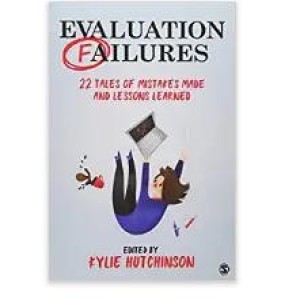
Kylie Hutchinson, independent evaluator and author of three books about evaluation and program planning: Evaluation Failures: 22 Tales of Mistakes Made and Lessons Learned, A Short Primer on Innovative Evaluation Reporting, and Survive and Thrive: Three Steps to Securing Your Program’s Sustainability talks about how to learn from common evaluation failures to improve impact and social justice. Her two tips are learning how to engage stakeholders more effectively and understand context when you're doing an evaluation. Here are three questions to ask yourself before launching an evaluation: 1) What are we trying to learn? 2) What are we going to do about the answers? 3) When do we need to know?
If you want to learn more, you can read a free chapter in the book here, or find some tips on how to find evaluators here: http://evaluationforleaders.org

Jan 9, 2020
Jan 9, 2020
16 min
Learning to be less dogmatic about answering the most important academic questions, but instead focus on the practical questions that would allow project teams to "innovate and push" around creating sustainable programs for WASH in schools. Matt Freeman from Emory University and Peter Lochery from CARE talk about what they learned trying to create research that moved programs forward, and allowed us to get better at the work--even when it wouldn't contribute to publications in prestigious journals. They talk about 13 years of research partnership in the SWASH+ project--and how lots of smaller, practical studies with rigorous methods were more useful than one big RCT.
Jan 2, 2020
Jan 2, 2020
10 min
"Fear of failure is the only thing that ensures your dreams won't come true." Hiba Tibi from CARE's Middle East and North Africa hub talks about what they're learning from programs that didn't work, and how they are using those lessons to improve sustainability and scale. A big lesson is that Women's Economic Empowerment programs have to focus on both gender equality AND solid business cases--but many programs only manage one or the other. You can check out more lessons in the recent paper: Bringing Gender Equality Closer to Women's Economic Empowerment.

Dec 4, 2019
Dec 4, 2019
18 min
Holly Radice--CARE's Global Cash and Voucher Assistance Advisor--talks about the most common mistakes she sees when people implement cash programming. Some of her tips? Pay attention to GBV, focus on women and engage men, and most of all--don't be afraid of cash! There are lots of resources that can help you get it right.
Oct 16, 2019
Oct 16, 2019
24 min
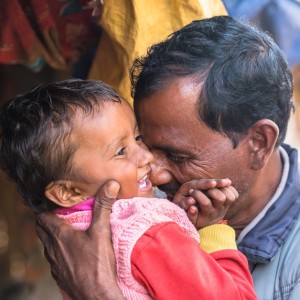
Anne Sprinkel and Dipendra Sharma from CARE's Tipping Point project talk about the challenges in implementing RCTs, and the risk of sacrificing communities' needs to the methodological rigor that researchers demand. "Make sure you have a good reason for doing an RCT," says Sprinkel. Sharma adds, "Start with good programming, then build research around it." They also have some great tips for managing expectations, clear communication, and just how long it takes to do it right (Hint: it's a lot longer than you think).
Oct 8, 2019
Oct 8, 2019
14 min
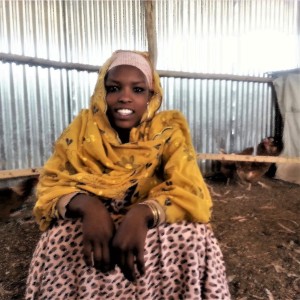
Zegeye Bante from CARE Ethiopia talks about working with youth VSLA, and what changes that requires from our traditional models. Youth are visionary and impatient, and want to meet their goals fast, so we have to accelerate our programming. At the same time, making sure that young people really understand the model, and that their parents and teachers accept and support the work we are doing takes a lot longer than it does with adult groups. So we have to find ways to build in more time at the beginning, and then get faster results so youth keep coming back.
Sep 26, 2019
Sep 26, 2019
12 min
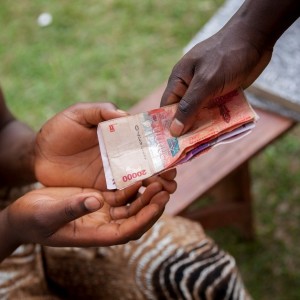
Grace Majara and Takara Morgan talk about starting savings groups in Uganda's cities in 2008, with no experience, and no one on the team who had ever done it before. We assumed that the city VSLAs would be exactly the same as rural ones, and we were wrong. Differences in financial literacy, poor access to services, and the need to bring in people who understood the context are all key lessons from Grace's decade of experience in the space.

Sep 19, 2019
Sep 19, 2019
17 min
Camille Davis and Barack Kinanga talk about the challenges of creating savings groups (VSLAs) in emergency settings. Barack works in Yemen, where they have been able to create savings groups, but only by making a lot of adjustments to our traditional model. Not every context works for VSLAs, and it takes longer for people in crisis to build up savings than in development settings. We also have to think about what happens if the people have to move again, and what they need to build resilience.