
18.5K
Downloads
119
Episodes
CARE staff around the world talk about experiences we learn from failure, and how we use that to get better at our work.
Episodes
Nov 9, 2022
Nov 9, 2022
12 min
Kalkidan Yihun talks about how to redesign data collection so it centers what people--especially women--want and need, instead of being a burden on their time and lives because of what's easiest for the data collectors and researchers. Kal coordinates the Women Respond project, and offers tips and lessons about what doesn't work (and does) in putting women's voices first.
Nov 2, 2022
Nov 2, 2022
10 min
What do you do when your pursuit of a necessary program partner falls through? Don’t waste time on pushing a failed strategy, and don’t be afraid to move on. How do you guarantee commitment from partners early on? Assess interest from partners to ensure equal buy-in on both sides. Naureen Chaudhry identifies two challenges and the resulting lessons experienced by the CARE Pakistan team while working with female entrepreneurs through the CARE Ignite Program.
May 26, 2022
May 26, 2022
28 min
Monica Tobar and Ronald Picso talk about their experience working with cryptocurrency instead of cash to support refugees and host communities in Ecuador. Some key lessons? Just do it--don't spend all of your time trying to get everything perfect. Get lots of feedback--participants will tell you what's not working. Build more supply--get many vendors up to speed on crypto so people have choices about where to shop. Plan for training--it takes time to learn a new technology, especially in a crisis. Plan lots of time to support people in using and adopting a new tool, it won't happen overnight.
Feb 16, 2022
Feb 16, 2022
5 min
Fe Kagahastian from CashCap’s Syria response and Reem Khamis from UNFPA talk about the importance of getting Cash practitioners and experts in supporting GBV survivors. Doing it wrong sets off all kinds of alarm bells, because if we do it wrong, we can hurt the people we’re trying to support. We need to speak “not necessarily the same language, but at least an understandable language.”
This podcast is produced in partnership with the Women's Refugee Commission and with support from the Swiss Agency for Development and Cooperation (SDC).
Feb 11, 2022
Feb 11, 2022
14 min
Madj Sawan from Ihsan for Relief and Development Organization and Ola Batta from the Shafak Organization talk about the challenges they see while working on cash responses to protect women and girls and support survivors of Gender-based Violence in Syria. Some of their recommendations are to speed up the cash process so survivors can get services fast, to make sure there is a referral system in place, and to prioritize survivors and take action to support them. This podcast is produced in partnership with the Women's Refugee Commission and with support from the Swiss Agency for Development and Cooperation (SDC).
This is a translation of the original Arabic podcast here: https://careinternational.podbean.com/e/move-faster-finding-ways-to-support-gbv-survivors-with-cash-services/
Feb 9, 2022
Feb 9, 2022
17 min
ARABIC Podcast. Madj Sawan from Ihsan for Relief and Development Organization and Ola Batta from the Shafak Organization talk about the challenges they see while working on cash responses to protect women and girls and support survivors of Gender-based Violence in Syria. Some of their recommendations are to speed up the cash process so survivors can get services fast, to make sure there is a referral system in place, and to prioritize survivors and take action to support them. This podcast is produced in partnership with the Women's Refugee Commission and with support from the Swiss Agency for Development and Cooperation (SDC).
Stay tuned for the English version of this podcast, coming soon.
Jan 11, 2022
Jan 11, 2022
24 min
Nour AlSaaideh and Heba Abu Deyak reflect on what they learned doing cost efficiency analysis with the Dioptra tool. When they look at Conditional Cash Transfers for Education, cost is one metric, but it's not the only--or maybe even the most important one. Learn more about how we can focus on effectiveness AND efficiency so that when we lower costs, we don't compromise on impacts. Focusing on just cost runs the risk of creating programs that reach a lot more people without providing useful impacts in their lives. Do it well, and with some structure, can you can learn a lot about improving your programs.

Dec 20, 2021
Dec 20, 2021
17 min
In this English version recorded based on translations from the original Arabic podcasts, Fatima Azzeh from CARE interviews Samar Karamo and Baraa Bobaki from IHSAN Relief and Development, who talk about what they've learned on designing cash programming so it supports and protects women facing gender-based violence. This interview his interview covers why cash is important, how to make sure we don't retraumatize survivors, and the importance of understanding local context and testing our approach. It also shows how important it is to set up safety plans, think about potential harm, and build in holistic services. This podcast is produced in partnership with the Women's Refugee Commission and with support from the Swiss Agency for Development and Cooperation (SDC). CARE and WRC’s programming that integrates CVA into GBV response is also supported by USAID’s Bureau of Humanitarian Assistance.
The original Arabic podcast was in two parts. The English language version covers the same content and is directly translated from the originals. However, it is in only one podcast because the recording time was shorter in English.
Dec 13, 2021
Dec 13, 2021
28 min
In our first ever Arabic podcast, Fatima Azzeh from CARE interviews Samar Karamo and Baraa Bobaki with IHSAN Relief and Development, who talk about what they've learned on designing cash programming so it supports and protects women facing gender-based violence. The first in a 2-part series, this interview covers why cash is important, how to make sure we don't retraumatize survivors, and the importance of understanding local context and testing our approach. This podcast is produced in partnership with the Women's Refugee Commission and with support from the Swiss Agency for Development and Cooperation (SDC). CARE and WRC’s programming that integrates CVA into GBV response is also supported by USAID’s Bureau of Humanitarian Assistance.

Oct 12, 2021
Oct 12, 2021
18 min
Holly Radice reflects on 3 years of cash and voucher programming at CARE, where we've grown, and where we need to invest more. Working with cash and vouchers to ensure that we're supporting gender equality and reducing risks of GBV is possible, but it's also a challenge. Here are some places that we need to strengthen: get participants more involved in design, listen to feedback, and understand that you've always got different levels of skills and experience are some of her big recommendations. She also says we need to be patient with ourselves, and always learning more.
Aug 27, 2021
Aug 27, 2021
20 min
Amani Idfonce from CARE Tanazania talks about how reinforcing the whole health system--especially with community health workers--makes it possible to get an even better COVID response than focusing on the disease alone would have done. How did they manage it? They worked on aligning with existing priorities, thinking about infectious diseases more broadly, and remembered to keep regular services running. Read more about the project here.
Apr 30, 2021
Apr 30, 2021
21 min
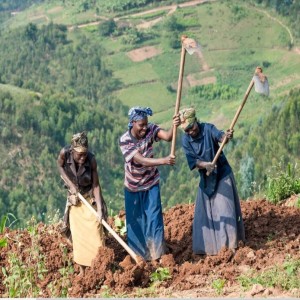
Zachary Vinyard from the One Acre Fund talks about how digital projects in Rwanda failed because of too many assumptions about what worked for farmers. His team has a new report on Digital Innovations, and how to get better. Key tips? Break inward. Design experiments so if they fail, the organization bears all of the extra risk and extra work, and the farmers you serve don't have to take it on. Also, don't assume just because the code works that it will work for people. The benefits we care about are to farmers, not to functional code.
Apr 9, 2021
Apr 9, 2021
19 min
"Don't try to win for yourself. Try to win for impact." Rahul Chandran talks about what he terms the catastrophic failure of innovation in the humanitarian sector, why importing the Silicone Valley model of innovation and scale doesn't work, and how collective action and anti-racism are the only solutions. "Scale isn't about big" is just one of his provocations to the sector at large.
Jan 19, 2021
Jan 19, 2021
26 min
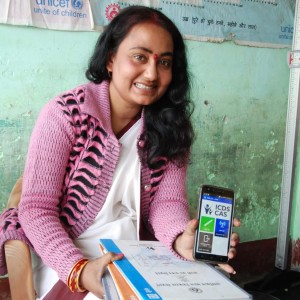
Dr. Tanmay Mahapatra and Dr. Shridhar Srikantiah from CARE India’s Bihar Technical Support Program explain how they use data to catch failures and make adjustments in real time with their Concurrent Measurement and Learning approach. Learn more at: bihar.care.org
Nov 12, 2020
Nov 12, 2020
17 min
Clement Bisai from CARE Malawi talks about what he and his team are learning about how to do better remote data collection. Focus, listen to communities, and reflect regularly are his key takeaways. Don't expect to outsource everything. Digital remote data collection may be the best way to work in COVID-19, but we're already learning how to do it better.