17.2K
Downloads
115
Episodes
CARE staff around the world talk about experiences we learn from failure, and how we use that to get better at our work.
Episodes

Thursday Feb 19, 2026
Thursday Feb 19, 2026
Lindsey Moore was working in AI before most of us knew what it was, and she can tell you the most common mistakes to avoid. Ignoring context, building ever more precise models that provide terrible answers, and assuming that AI will replace smart strategy and human decision-making are three on the top of her list. If you're looking to do more with AI, she recommends you invest in learning good research methods, double-down on your data architecture, find ways to counteract bias, and stay skeptical.
Developmetrics' Large Language Model with was trained on 60 years of USAID documents, and taps into a wealth of expertise that doesn't exist anywhere else. It can tell you what has worked, and what hasn't, over decades of work in dozens of countries. Here's what it tells us: we often repeat the same failures over and over again. Why? Because failures are as much about organizations as they are about tactics. The newest widget won't solve an organizational culture that drives people away from spending time understanding the local context.

Tuesday Dec 09, 2025
Tuesday Dec 09, 2025
Eric Kaduru and Julia Arnold talk about why simply distributing phones doesn't help people--especially women--access the internet. After seeing free phones get broken, stolen, or cause men to punish women for owning phones, they needed a new plan. Instead, they talked about learning from HIV prevention campaigns in the 90s, demystifying something complex, and making learning accessible. Social norms are at least as important as technology. Soap operas, hip hop concerts, and talking to men are critical tools in opening up access to tech for women in Uganda, and worked better than free phones ever have.

Tuesday Sep 02, 2025
Tuesday Sep 02, 2025
CARE has a more than 30 year history with savings groups--starting from the lowest tech version you can possibly imagine: 25 women with a box and a notebook in Niger. Building on that, in 2013, we launched the process of building Chomoka--an app that would help women in savings groups manage their record keeping and connect to digital finance. Christian Pennotti talks about that journey, and why we finally passed the work over to Ensibuuko. Building a successful, scalable enterprise around digital tools was ultimately better put in the hands of a tech company that focuses on banking tech for people who can't access existing tools. What did we learn, and what are we doing now? Tune in to find out.

Tuesday Aug 12, 2025
Tuesday Aug 12, 2025
What happens when you try to build an AI tool that works for women entrepreneurs – and it totally flops? In this episode of Failing Forward, CARE’s Koheun Lee and Sarah Hewitt share the story of their ambitious attempt to create a women-centered GPT trained on real-world data from women entrepreneurs. Spoiler: it didn’t go as planned. But the failure revealed a lot.
In this episode, Koheun and Sarah discuss:
- Why CARE built a custom GPT to fight bias, and what went wrong
- How even well-trained AI tools can reinforce stereotypes and exclude women
- What we learned about prompt design, user behavior, and the limits of scrappy innovation
- Why most users still defaulted to mainstream AI tools
- Actionable tips for using AI more intentionally, and with less bias
- What this "failure" taught us about building better tools and better teams
Tune in for a candid conversation about tech, bias, and what it really means to learn in public. To learn more and join the conversation, visit the Women’s Entrepreneurship LinkedIn Community of Practice.
Tuesday Nov 12, 2024
Tuesday Nov 12, 2024
"If you've already built an elevator to the first floor, why not take it all the way to the top?" Vidhya Sriram talks about the journey of savings groups (also called VSLAs) at CARE, and what it took to think not just about scale, but also about the biggest benefits to women. VSLAs do build savings and income, but they can also do so much more. She talks about understanding what women themselves aspire to, not what we aspire for her. She also talks how savings groups can be a platform for women to build economies, change the support women get from the people around them, and thinking about building not just savings, but also equality that benefits the whole community. Check out the report here.
Tuesday Oct 01, 2024
Tuesday Oct 01, 2024
What happens when you don't see the results you hoped for in your project? If you're Dr. Nahla Abdel-Tawab from Population Council, you publish your results, learn from them, and try again. Some of the biggest barriers they faced were: assuming that private sector health solutions were the answer, asking workers the wrong questions about what they needed, and not understanding the context that garment factory workers in Egypt deal with when trying to access health care. Great examples of learning, admitting that it didn't work, and finding a better way to get results. You can see more about the project here.

Tuesday Sep 17, 2024
Tuesday Sep 17, 2024
What does it take for people and the planet to thrive? We have to show up. C.D. Glin, President, PepsiCo Foundation and Global Head of Social Impact, PepsiCo. After decades in social impact, government, and philanthropy, C.D. talks about some of his earliest lessons as a Peace Corps Volunteer in the new South Africa, and the inspiration of Nelson Mandela’s quote, “I never lose. I either win or learn.” Appreciative inquiry, meeting people where they are, and knowing you don’t have all the answers or some of the key lessons.
Tuesday Sep 03, 2024
Tuesday Sep 03, 2024
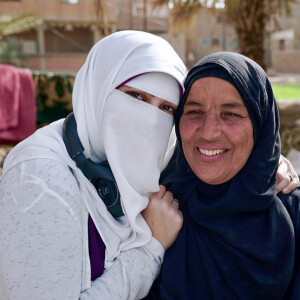
What happens if we stick with business as usual? We fail by default. C.D. Glin, President, PepsiCo Foundation and Global Head of Social Impact, PepsiCo, Inc talks about food systems are failing women, and what companies can do to correct for that. Thinking with a whole of company approach, beyond just philanthropy, is critical. Companies have to use their profits, their products, their procurement, their people, and their markets if we’re going to achieve #zerohunger. He talks about how COVID-19 was a wake up call to the visceral challenges in the global food system—like climate change and inequality—and how to turn a moment into momentum. He also talks about how projects like She Feeds the World can help address these challenges.
Tuesday Aug 27, 2024
Tuesday Aug 27, 2024
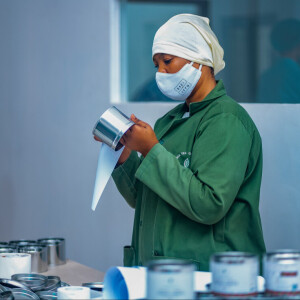
Tahira Nizari and Barnabas Mtelevu talk about what it took to overcome the challenges in the tea sector in Tanzania, and how assuming that smallholder women farmers could immediately join a global supply chain demanded new partnerships and new plans. How do you grow from an individual farmer to a business? Don't assume it will happen automatically. Just because you're a businesses doesn't mean it will work. On the other hand, you can't assume a development project is set up to meet market needs. A demonstration factory, joint ownership with women farmers, and getting global investment were part of the key in shifting to a more business mindset in the partnership between CARE and Kazi Yetu. It led to a 17% increase in tea prices and an 83% ROI. Learn more about how they did it here.
Tuesday Jul 30, 2024
Tuesday Jul 30, 2024
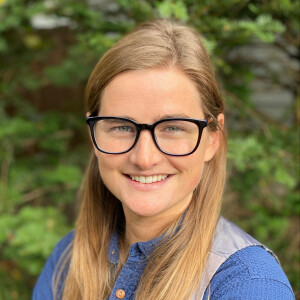
What happens when your consultation processes go off the rails? Lauren Beriont from The Emgergence Collective talks about how a lot of our feedback and co-creation processes face three major problems:
1) They assume a trust that does not exist between different stakeholders
2) They are centering the wrong actor--the donor or the most powerful group in the process--instead of focusing on the impact the world needs to see.
3) They are looking to validate a plan that is already in place (but maybe not on paper yet), not create a new plan
How do we fix that? Have scary conversations. Talk about what's not working, what assumptions people holding, and tackle real power dynamics. Look at what impact donors expect, vs. the kind of impact people are actually seeing happen.
Monday Jul 01, 2024
Monday Jul 01, 2024
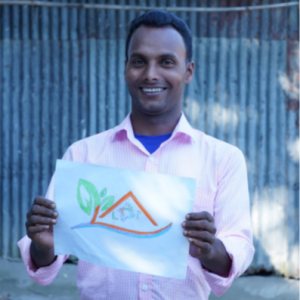
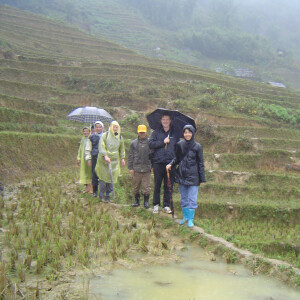
What's in a logo, and why does localization need to include participant-led logo design? Zinat Ara Afroze and Sairana Ahsan explore the logo competition to have frontline service providers design a logo for their own services. What did they learn? Only 9 people out of a potential 450 participated in the competition the first time around, and understanding why not, and what level of understanding it takes to draw a logo that sums up your job showcased how much more shared understanding there was to build. Zinat's recommendation for what you should do? Practice adaptive management and CLA. Check out their case study here.
Thursday May 16, 2024
Thursday May 16, 2024
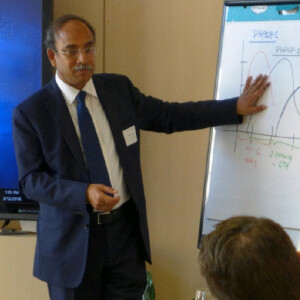
Inspired by his recent blog post on From Poverty to Power, Duncan Green reflects on why it's important to learn from failure, and some of his own failure stories. "Think before you jump", and "be a reflectivist as well as an activist" are some of his key pieces of advice to people working in the sector. He's got stories about playing chess from the management bunker, evidence-based humility, and How Change Happens, the second edition paperback and Open Access that's coming out starting from August 16.
Want to hear more stories from Duncan and the change makers he works with? Listen to his podcast: GELI Stories podcasts
Tuesday May 07, 2024
Tuesday May 07, 2024
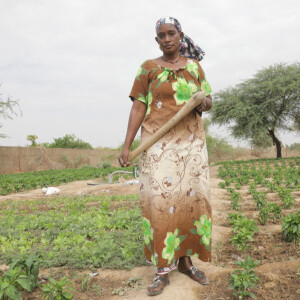
"I wish I had known that my biggest source of learning would be my field colleagues. ...I believed in textbooks." Dr. Muhammad Musa reflects on 41 years of work in international development. His two biggest lessons are: learn from your frontline staff, and tell stories with impact. Some lessons he learned in the decades are to build a fearless climate--a climate of trust, where staff at all levels can learn from failure, and can take time to reflect. He also notes that moving from a project to a movement--one that changes a system--is the best way to create change. Technical solutions are not the only (or even the best) way to get the job done.
Monday Apr 22, 2024
Monday Apr 22, 2024
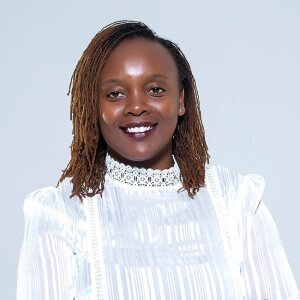
The Feed the Future Mali Sugu Yiriwa operates in the Delta Zone of Mali, aiming to strengthen the resilience of farming and business communities through market-driven, inclusive, nutrition-sensitive, and agriculture-driven economic growth. However, the complex nature of Mali’s political situation poses significant challenges to program implementation and participant outreach. In this episode of the Failing Forward Podcast, Laurore Antoine, Chief of Party for Sugu Yiriwa, shares valuable insights into how adaptive leadership, collaboration with local grassroots organizations, and strategic use of digital solutions, among other adaptive management approaches, have been instrumental in achieving program goals and positively impacting lives in Mali.
Tuesday Mar 26, 2024
Tuesday Mar 26, 2024
Christabell Makokha talks about always anchoring innovation to the success metric: have I solved the problem? Instead of focusing on the process, focus on the problem, and whether or not people's lives are getting better. She reflects on why innovation labs fail (inspired by this article from ICTworks). What's going wrong?
- We define innovation as "the next new thing" rather than leveraging creative problem solving.
- We struggle to find the balance between stand-alone innovation work and innovation integrated with existing programming
- We measure the wrong things--too much process measurement, and not enough problem-solving.
- Our risk appetite is too low, and our timelines are too short.